.svg)



The $100B Database Market Faces Structural Disruption as AI and PostgreSQL Converge
The global database market — valued at over $100 billion — is entering a new phase of structural disruption. The announced acquisition of Neon by Databricks signals a profound inflection point driven by AI-native workloads and the accelerating adoption of PostgreSQL.
AI Is Redefining Database Architecture
Databricks’ intent to acquire Neon, a serverless PostgreSQL platform, underscores a fundamental reality: AI agents are changing how databases are provisioned, scaled and consumed.
Internal telemetry from Neon revealed that over 80% of databases provisioned on its platform were created automatically by AI agents rather than humans. This is not incremental change. It represents a shift toward machine-speed infrastructure.
Traditional databases were designed for human-driven workloads. AI agents operate differently:
- They spin up isolated environments in milliseconds
- They require instant branching for experimentation
- They demand compute and storage to scale independently
- They expect cost structures proportional to actual usage
Neon’s ability to provision a fully isolated PostgreSQL instance in under 500 milliseconds illustrates the new baseline.
PostgreSQL as the AI-Native Foundation
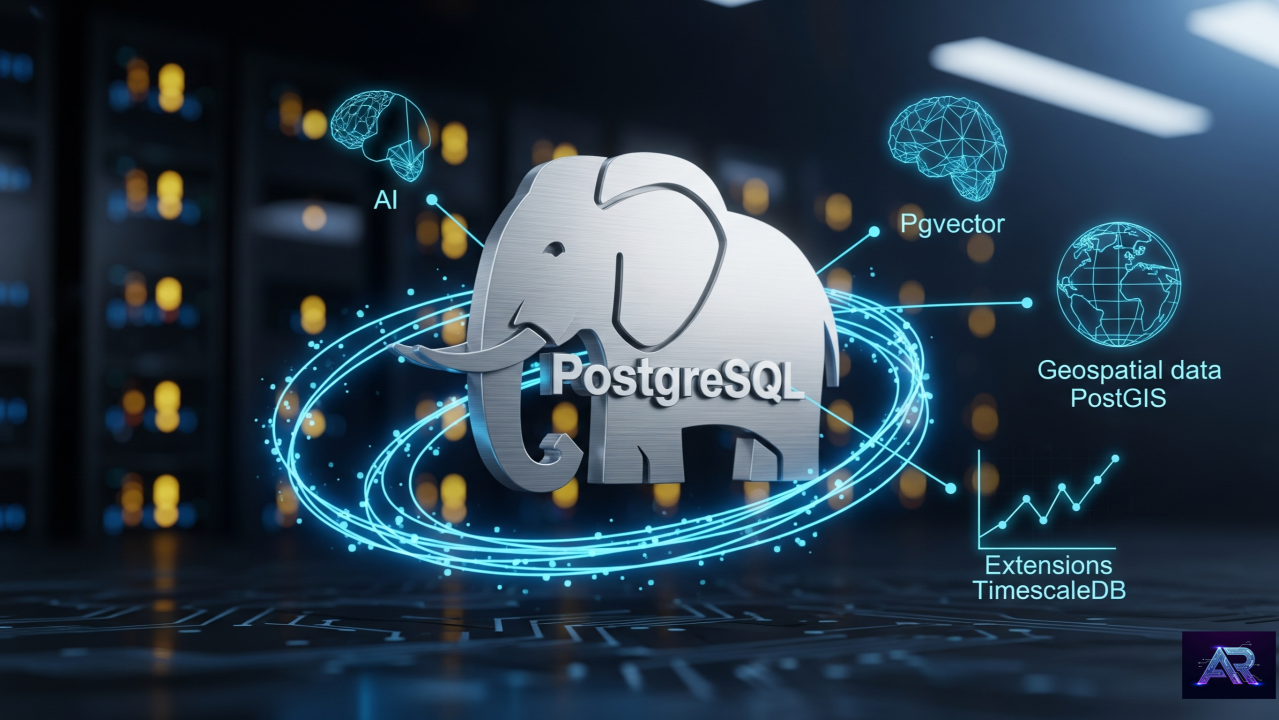
This move reinforces a broader trend: PostgreSQL is becoming the default open foundation for AI-native systems.
Why?
- 100% PostgreSQL compatibility within a rich open ecosystem
- Full separation of compute and storage
- Support for extensions and vector workloads
- No proprietary licensing constraints
AI agents do not operate efficiently within rigid, core-based licensing models. They require elasticity, openness and cost proportionality — attributes inherent to PostgreSQL.
From Database Vendor Control to Data Platform Intelligence
Databricks, relied upon by over 60% of Fortune 500 companies, integrating serverless PostgreSQL directly into its Data Intelligence Platform is strategically significant.
It signals that the competitive battleground is no longer database licence revenue. It is AI infrastructure control.
The integration aims to:
- Eliminate data silos
- Remove scaling inefficiencies
- Prevent performance bottlenecks from thousands of concurrent agents
- Reduce total cost of ownership
- Accelerate AI deployment
This aligns with a broader market movement: proprietary database models struggle to accommodate agentic speed and elasticity without escalating costs.
The Strategic Implication
This is not simply an acquisition. It is validation.
PostgreSQL is evolving from an alternative database into the structural backbone of AI-native architecture.
The $100B database market is no longer defined by traditional licensing dominance. It is being reshaped by open architecture, serverless scalability and AI-driven provisioning.
The shift is not cyclical. It is systemic.
And it is accelerating.
.svg)